Not many 24-year-olds have the opportunity to be in the position Rob Hill is in right now. Who would of thought that someone so young is in the business of developing not only some of the most explosive arms in baseball, but on one the best teams in MLB. What’s more impressive is that this comes only two years after finishing his college baseball career. Hills resume is not like the many coaches in his position, most having multiple years of experience in minor and Major League Baseball. So just how did he manage to find himself as a major developmental part of a such an amazing pitching staff?
Hill almost quit baseball entirely after a poor freshman year with a fastball ranging from 81-83 mph at Skagit Valley College in Washington. After seeing no progress throughout summer ball that year, Hill’s father suggested he visit the Driveline headquarters in Washington. Today Driveline is known throughout the country as an analytically driven facility where pitchers go to workout and increase their velocity. Back in 2014, not many people knew who or what they were doing over there. A blog post detailing how a pitcher went from throwing in the 70s to touching 90 mph was enough to convince Hill that the trip was worth it. Now 70 to 90 is a huge gap to overcome, so they must be doing something right over there. About a month after his training Hill was sitting 86-88, while touching 90 mph and gaining his confidence back as well. Hill noted that Driveline has advanced so far from his trip back then that what he learned was almost rudimentary to what they know now.
“It’s freaking nuts, man. I’m 24.”
Rob Hill when asked about his current job status
Hill returned to his junior college for his sophomore year and claimed the Friday night starter spot, a spot usually held for the teams top pitcher. Hill was able to sustain his velocity until a back injury prevented him from doing his full driveline program. He continued to pitch, but that only led him to a shoulder injury. He was diagnosed with a torn labrum. When doctors went in for the repairs, they found no such damage. They cleaned up everything in his shoulder but had to make no such repair for a torn labrum. Hill would miss 16 months of competition, a huge setback for someone who was no stranger to failure. He would then skip a semester of school after signing to play for Wesmont College in Santa Barbara. Returning to Driveline to rehab, Hill had found that Driveline had turned into a haven for college baseball players looking for a last shot at getting better. The success of players who visited there continued to grow. A year after surgery, he returned to the mound throwing 88 mph. Hill stated it was the best day of his life and I can feel every bit of that. After two surgeries to attempt to come back from a torn labrum, I was able to hit the mid 80s with my fastball back in college. Nothing close to what I wanted, but I had the whole pitching staff there cheering me on as I threw. It really was one of the few bright spots in a long dark rehab and can say honestly I wanted to cry. To go through all that and come out the other side with some success, it felt really great. For his junior campaign at Westmont, Hill was 88-90 mph.
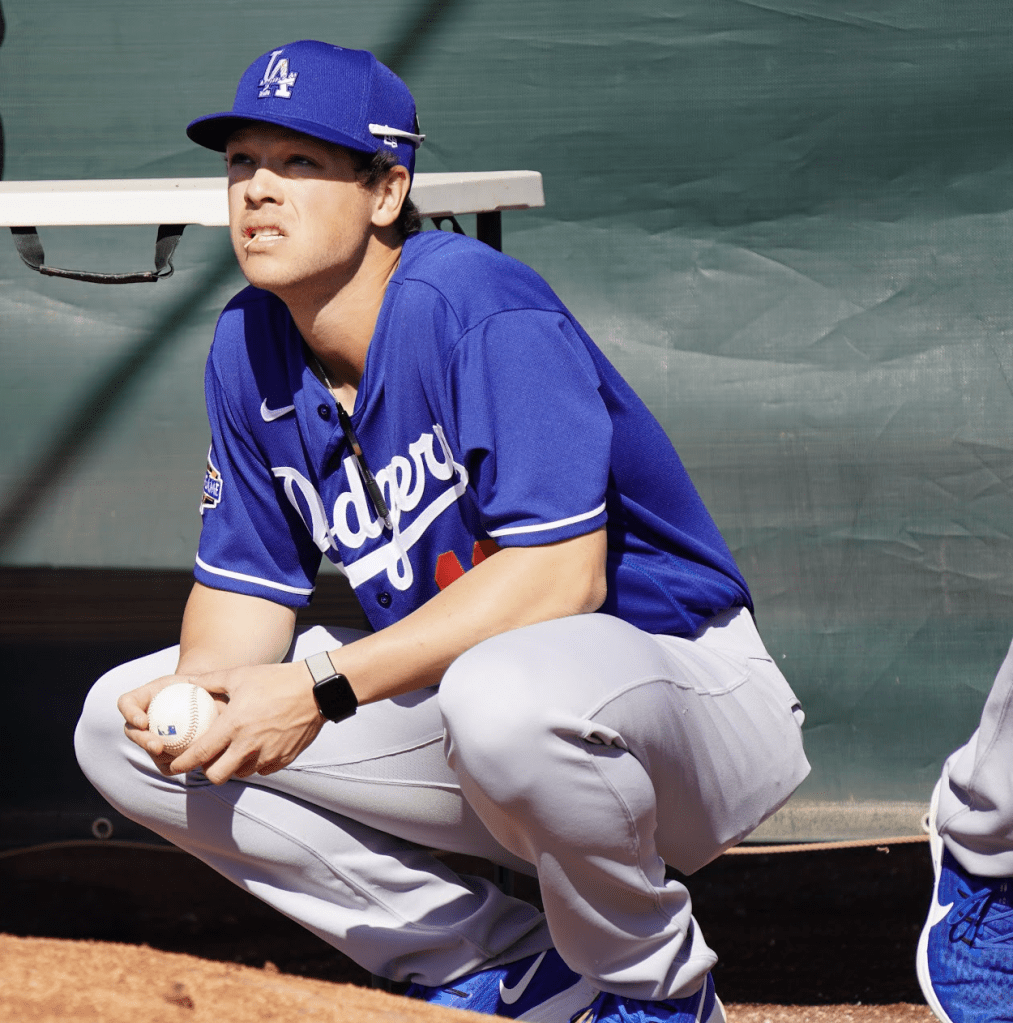
Unfortunately for Hill, his senior year was riddled with injuries and other aspects of life that kept setting him back. In 2018 he started working full-time at Driveline, helping them continue to grow their methods. He knew he didn’t want to sit at a desk the rest of his life. After dealing with some elite MLB pitchers at Driveline he knew he was the type of person that wanted to work one-on-one with these guys. Hill fully embraced the phrase, “practice what you preach.” In order to do that he took six months off to recuperate and fully transform his body and mechanics. Going through the process, he wanted to understand how each component of the process needed to be done. He knew without having to go through all of the work, big league guys wouldn’t put their trust in him. Low and behold, a few months ago Hill threw a bullpen sitting 95 mph. Soaking in all that he learned, Hill used that information to help many pro pitchers. Trevor Bauer who has been with Driveline from the beginning was impressed so much with Hill that he recommended Alex Wood of the Dodgers work with him in the off-season. Wood worked at Driveline four times this offseason and after averaging 89.9 on his fastball the last two years, Wood was already touching 90 mph. I know it’s not a significant jump, but Wood is already throwing at a higher velocity than the last two years and continues to use the Driveline methods to increase that. Wood credits Hill with being able to take all of these numbers and translate it into positive results. Because Hill went through it himself and saw how all of the numbers affected his pitching, he is able to put it into context for pitchers who have never seen this data before.
“I personally like to bridge subjectivity and creativity in with the objective data to find a more natural, true path to improvement.”
Rob Hill on his approach to working with his players
A number of Dodger pitchers would follow Wood, from Clayton Kershaw to Kenley Jansen. All worked with Hill using different technology to correct weakness in their game or find more effective ways of throwing. Jansen understood that no matter who you are or how long you’ve been pitching there’s always room for improvement. The people at Driveline are always trying to use technology to find more efficient and effective ways of pitching. Collecting all this data and trying to make sense of it all, basically using the information for trial and error. A lot of pitching is this, understanding why a pitch went that way or didn’t do this. And all this information is in real time, which allows pitchers to make adjustments on a pitch-to-pitch basis. After talking with Dodgers personnel and learning that the they were very open to the new idea of using analytics to help their players, Hill was immediately interested in working full time for them. Hill uses creativity and data together for each individual to find that true path of improvement. A lot of successful organizations have taken the initiative when it comes to analytics and trying to understand what all these numbers mean, by bringing in younger coaches that can understand what all the data means. Not only must you have the ability to understand it but translate that to a number of different players. I think a lot of players connect with Hill because of everything he went through, and he is a proven example that this Driveline system works. This is only the beginning of this mesh between traditional and analytical style of training and I am excited to see where baseball heads from here.
 The Washed Up Athlete