Ever since the story of the Astros sign stealing came to light, people have continued to debate two of the biggest scandals in baseball history. That fact that one was worse than the other for the game of baseball. A case can be made for both, but many believe that what the Astros have done is far worse. The main argument is the fact that you can take PEDs, but you still need to know how to hit. You gain more of an advantage knowing what sign is coming than being stronger. It can be also said that taking PEDs was a player decision, not a complete organizational scheme. Both are serious threats to the games integrity, but what affects the players more?
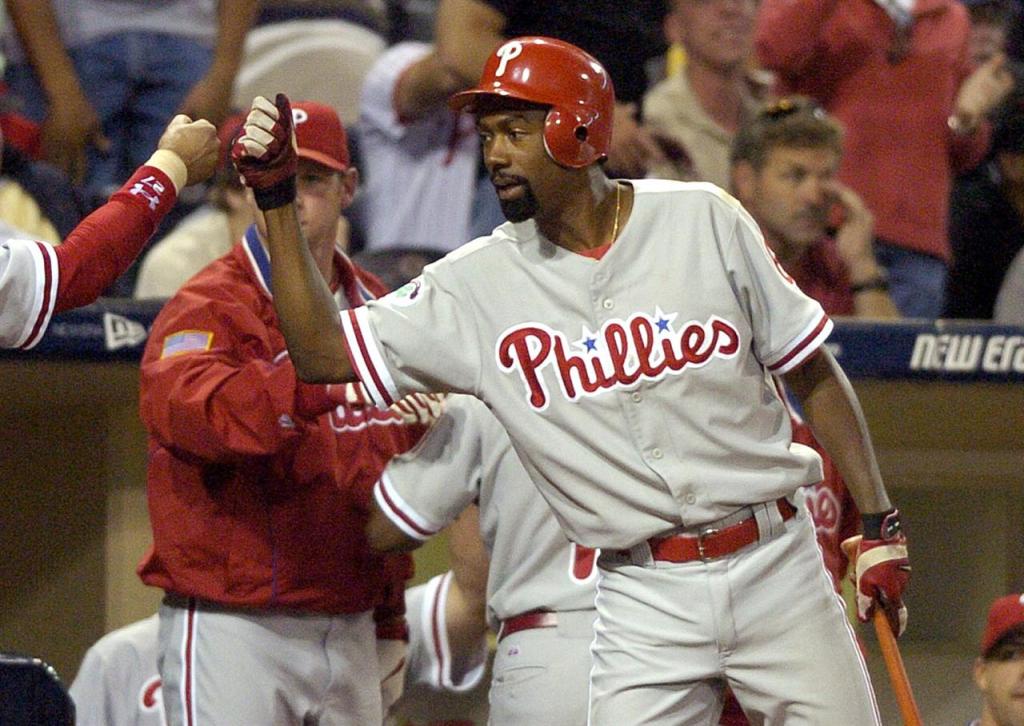
Former MLB player Doug Glanville makes his case for clean players during the steroid era. When Glanville was traded to the Phillies in the winter of 1997, he immediately faced competition against Lenny Dykstra who was utilizing PEDs. Dykstra was nearing the end of his career and later retired that season, thus making room for Glanville’s starting years. It was the year 2002, a less productive and aging Glanville saw his days were numbered. This was when Marlon Byrd was making himself known as their next generation center fielder. Glanville signed with the Texas Rangers in 2003 knowing he would be losing the starting job to Byrd. He would later sign back with the Phillies in 2004 as a veteran type role. Even with a struggling Byrd that year, he knew he would never reclaim his starting role and retired in 2005. Byrd went on to have a long 15 year career in the bigs, with a lot of success but tainted by two suspensions for banned substances. This left Glanville, who saw himself as a mentor to Byrd, extremely disappointed. Not only in himself, but it had him questioning the legitimacy of him being fairly replaced. Glanville states that players started to fully understand what the impact that PEDs had on their careers. If you were a clean player you would be at a disadvantage against a player that was using them. If you were a veteran player in decline, players putting up big numbers using PEDs would only be making your exit quicker. One of the worst parts of the situation was that you didn’t know who was a friend or foe. In Glanvilles case, he felt betrayed for helping give support to a player who was already at more of an advantage than him and who he knew was going to replace him at some point.
“First, you need to get an opportunity. Next, you must put up the numbers or show enough value to earn a consistent role. Then you must maintain that level — and, hopefully, get paid accordingly. And then you must keep proving yourself, again and again.”
Doug Glanville via ESPN
According to Glanville above are the steps that take you into the bigs and will keep you there. Year after year, you are going to be compared to a number of different players. What is your value compared to those other players? Whether that competition be inside your organization or through free agency. If you can stay healthy and continue to produce, you will find an opportunity somewhere. So how does this affect clean players? In the steroid era the numbers all around for each position were “juiced” themselves. It shifts organizations expectations at each position. If you’re not going to put up those types of numbers, you are not going to get an opportunity. How could you be able to put up those numbers playing against superhumans? Glanville knew he couldn’t compete against theses guys, but he wasn’t the only one. There’s no starting date for the steroid era in baseball, but it is considered to have started in the 80’s and lasted through the late 2000s. Even though MLB banned steroids in 1991, they did not start implementing league wide PED testing until 2003. The amount of clean players that had their careers ended due to this due to PEDs would exceed the number of players that were affected by the Astros sign stealing scandal.
The case for the Astros sign stealing is legitimate as well, any team that played against the Astros were put at a disadvantage. Even worse, some pitchers careers were ruined when they pitched poorly and were sent down, only to never come back to the bigs again. Were a lot of players affected? Absolutely, but you know who felt cheated in a major way too? The fans. I believe a lot of fans look at PEDs as something that was done all around the league, so every team had that advantage or disadvantage. From what we know, the Astros were the only team to take it as far as they did. The whole organization decided to be apart of it, instead of it being a league-wide issue. How are we supposed to trust that the last few years games played against the Astros were played without the scales being tipped?
“…when you are going to arbitration or into free agency, when you are aging out, all of these numbers swirl around your head and dangle the temptation to do something “extra” for just this year…”
Glanville via ESPN
In every sport there’s always going to be people looking for an edge. Whether that be a new performance enhancing substance or the illegal use of technology. If I have learned anything, it’s that if you cheat the game, it will eventually come out. It’s hard to compare the two, but Glanville makes a valid case. PEDs were more likely to push a player of the game than sign stealing. Is it fair that players careers were shortened due to being unjustly compared to spiked up numbers? No. Is it fair that Astros players knew what pitchers were coming? No. Were both situations were bad for the integrity of baseball and affected many people? Yes. I just thought it was very interesting hearing this side from a player who had to live and fight against players using PEDs, until it finally shut him out of the game.
 The Washed Up Athlete